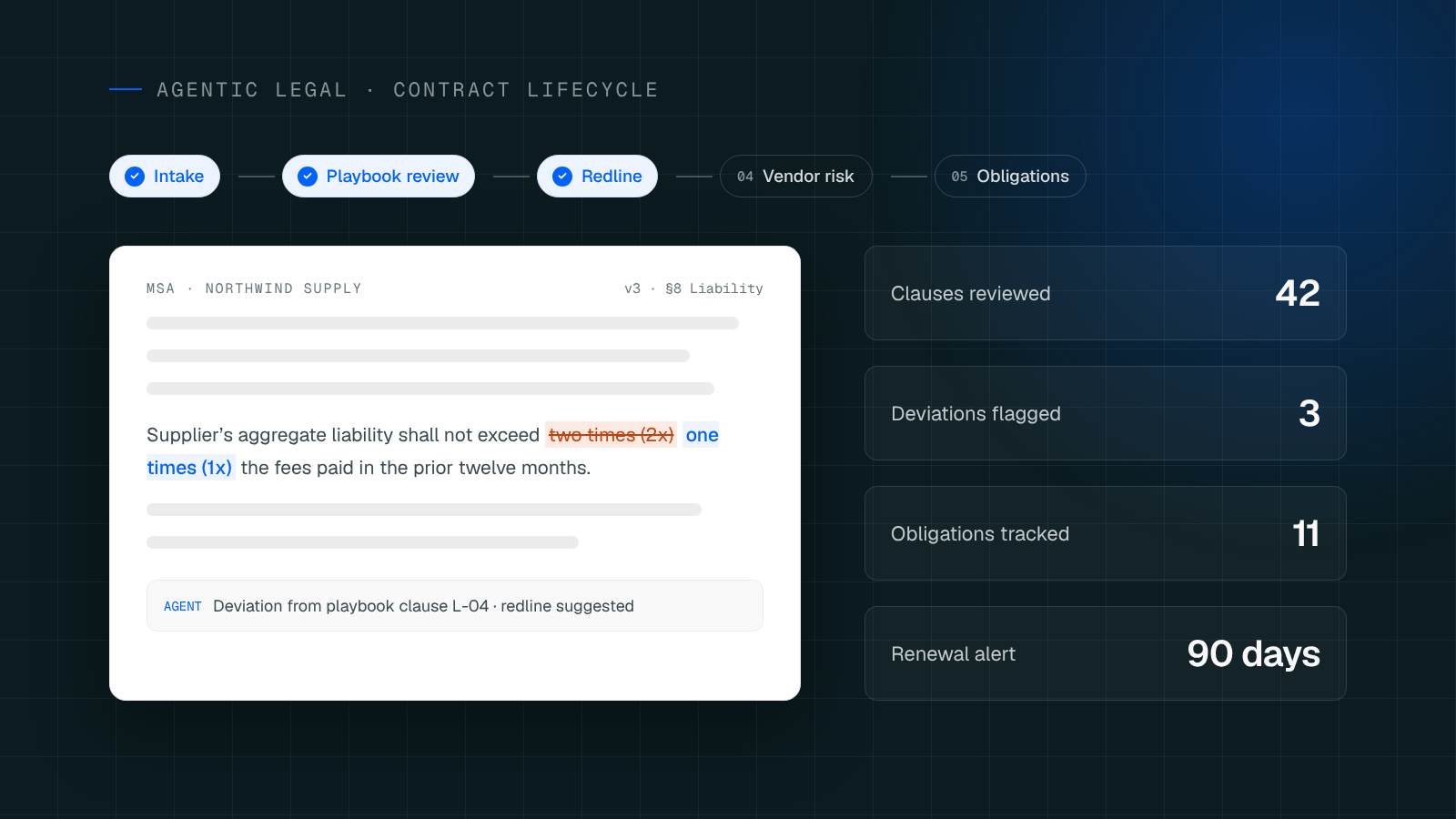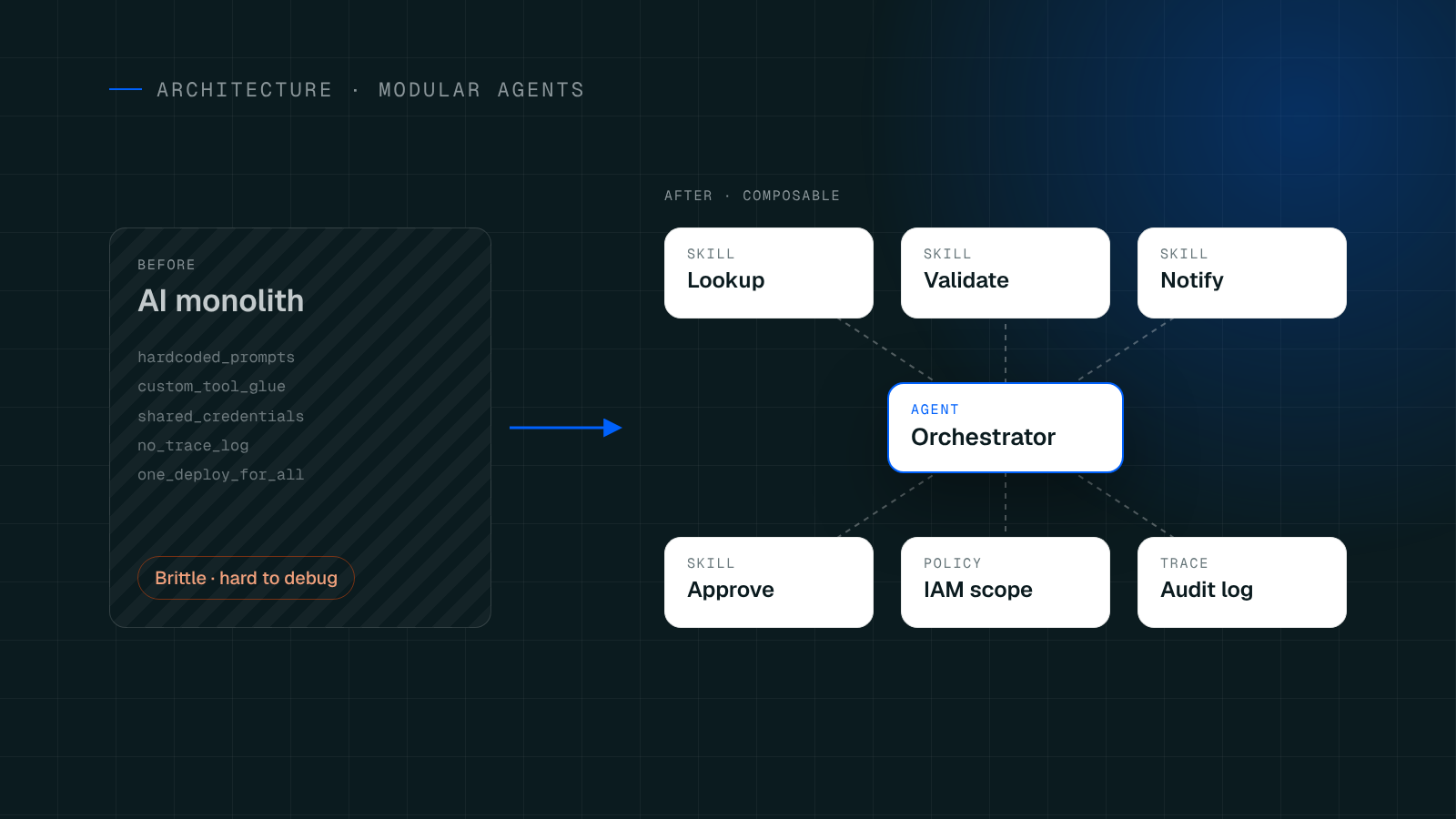
The approach to building enterprise AI is fundamentally broken. When engineering teams set out to create an "AI agent" for a specific business problem—say, an IT helpdesk bot or a legal contract reviewer—they almost always start by building a monolith.
They write hardcoded API connections, bake rigid logic into massive prompts, and tightly couple the LLM to the database. The result? A brittle system that breaks when an API changes, cannot easily be audited, and is impossible to reuse across the company.
Cenna Apex introduces a radical architectural shift: the Composable AI Enterprise. By decoupling the execution of tasks (Skills) from the orchestration of workflows (Agents), Cenna transforms AI development from monolithic prompt engineering into modular, auditable software engineering.
Here is a technical deep dive into how Cenna's Skills and Agents framework accelerates enterprise deployment.
The Design Pattern: Decoupling Orchestration from Execution
To understand the Cenna architecture, you have to separate the "brain" from the "hands."
1. Skills: The Micro-Functions (The "Hands")
A Skill in the Cenna platform is an atomic, reusable operation. It is a specific tool designed to do exactly one thing reliably.
Instead of an LLM guessing how to format a JSON payload to hit an internal API, developers define a Skill. Examples include:
okta_reset_password: Triggers a secure password reset flow.stripe_create_refund: Stages a refund for approval.erp_match_invoice: Checks a purchase order against an incoming invoice.zendesk_update_ticket: Posts a drafted reply to a customer support ticket.
Because these skills are modular, they are built once by your platform team and can be reused infinitely across different departments.
2. Agents: The Workflow Managers (The "Brain")
An Agent is an autonomous orchestrator assigned to a business outcome. The Agent itself doesn't contain the hardcoded logic to reset a password; instead, it uses reasoning to determine when it is appropriate to use the okta_reset_password skill.
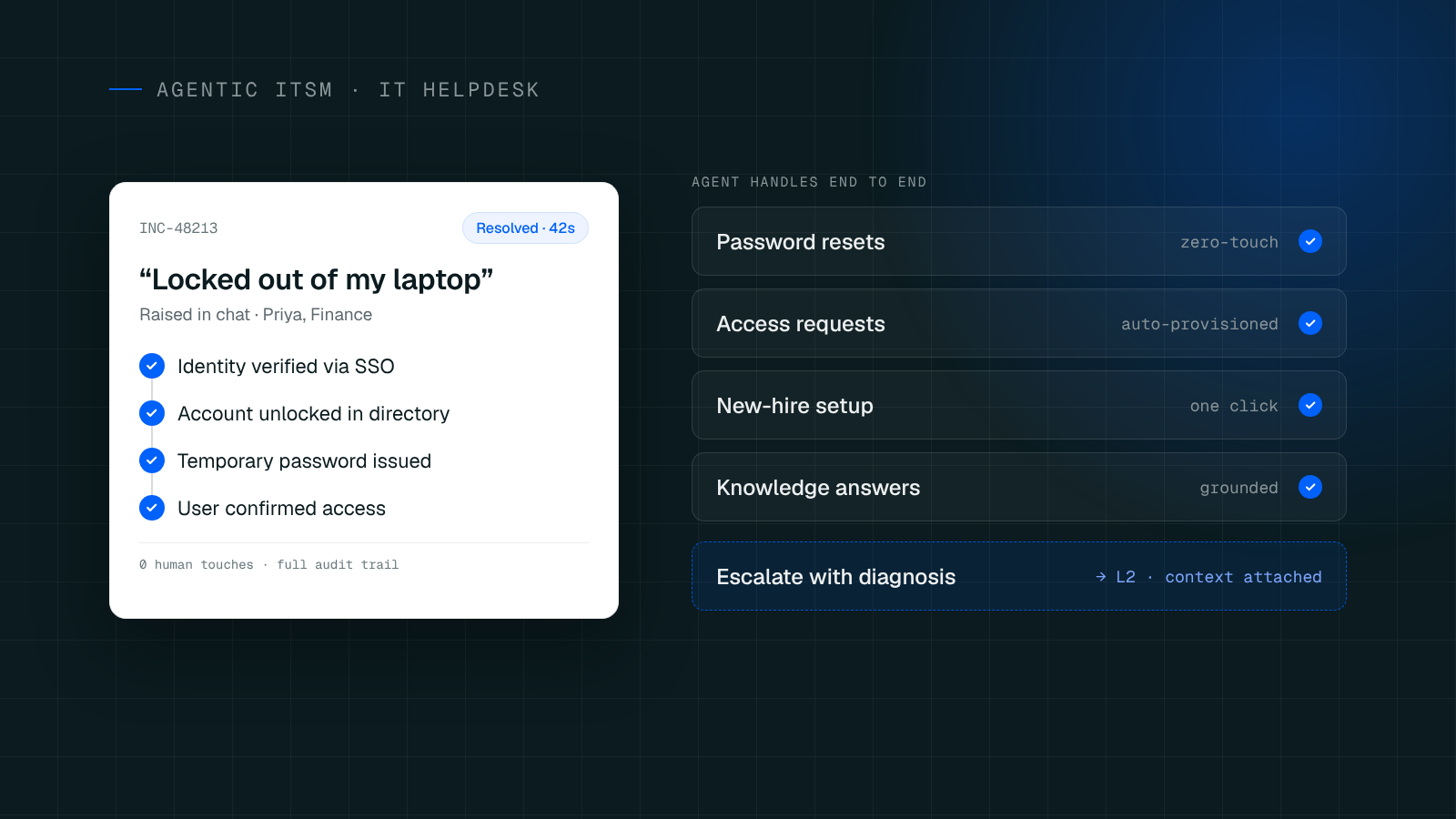
When a complex request comes in (e.g., "My laptop is locked out and I need to file an urgent IT ticket"), the Agent dynamically plans the steps, selects the appropriate Skills from its authorized library, executes them in sequence, and verifies the results.
Zero-Trust Governance: Explicit Scoping
The biggest fear enterprise CISOs have regarding "agentic AI" is a rogue agent with broad permissions deleting a database or sending unapproved emails. Cenna’s modular architecture solves this through explicit scoping.
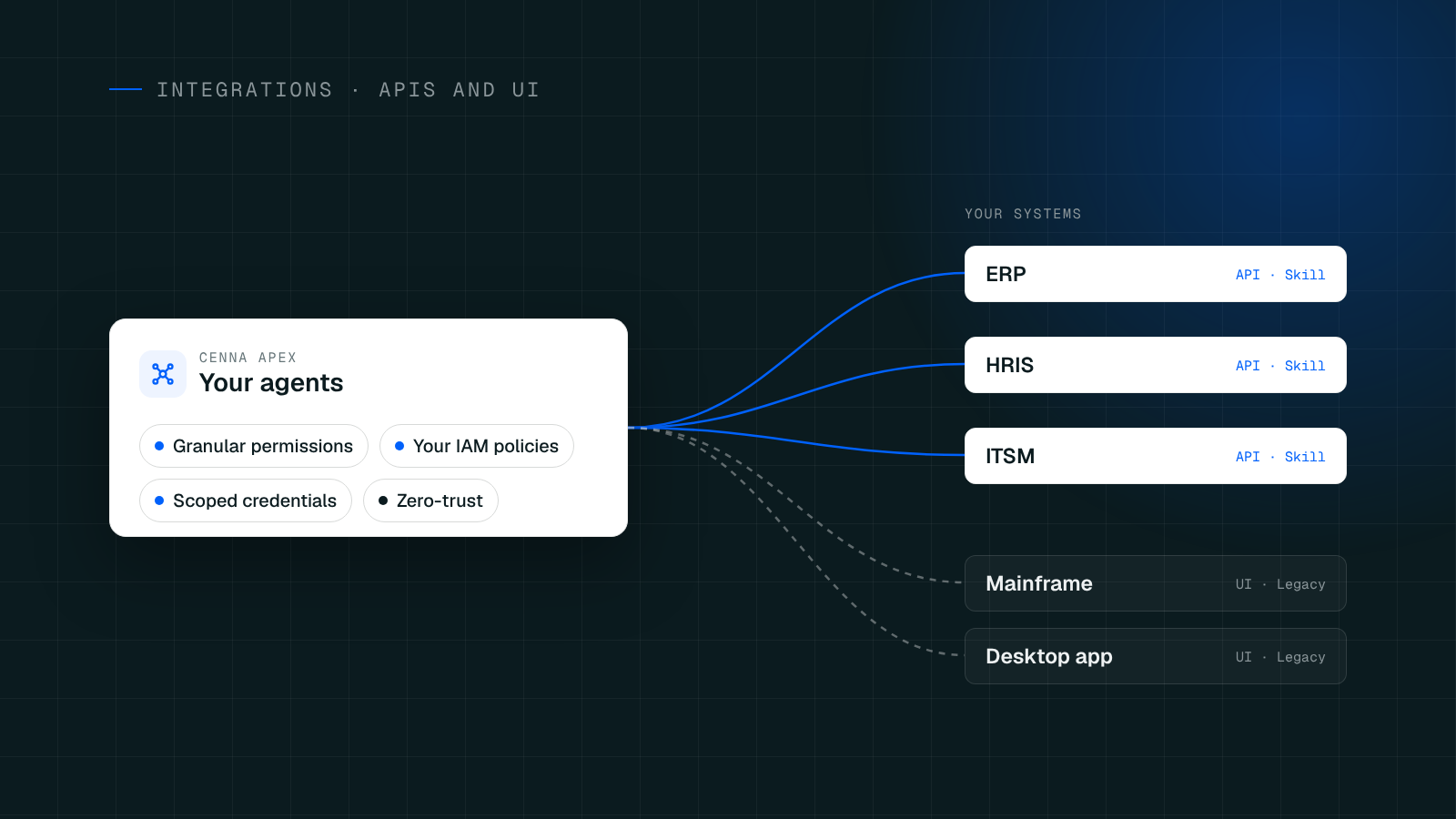
Because Skills are isolated micro-functions, they operate under strict IAM (Identity and Access Management) boundaries.
If an Agent is assigned to IT support, it is only granted the Skills necessary for that domain.
When a Skill connects to an external system (like Slack or SharePoint), it declares an explicit scope (e.g.,
Slack chat:write). The Agent literally cannot perform an action outside of that predefined boundary.Because Cenna deploys completely within your own AWS or Google Cloud account, all of this authentication is wired directly into your existing SSO and cloud security guardrails.
The Velocity Advantage: Traceability and Debugging
In a monolithic AI chatbot, diagnosing a failure is a nightmare. If the bot gives the wrong answer, developers have to dig through massive prompt chains and guess where the logic went off the rails.
In Cenna’s framework, every action is a traceable span.
When an Agent executes a workflow, the Cenna console records a step-by-step trace. If a customer support agent hallucinates or gets stuck in a loop, a platform engineer can open the trace and see:
The exact reasoning the Agent used to select a Skill.
The exact API payload sent by the Skill.
The response received from the external system.
The token and cloud compute cost of that specific micro-task.
This granularity allows developers to debug AI applications the same way they debug traditional microservices. They can replay the run, fix the specific Skill that failed, and push an update without tearing down the entire application.
Shipping Real Applications, Faster
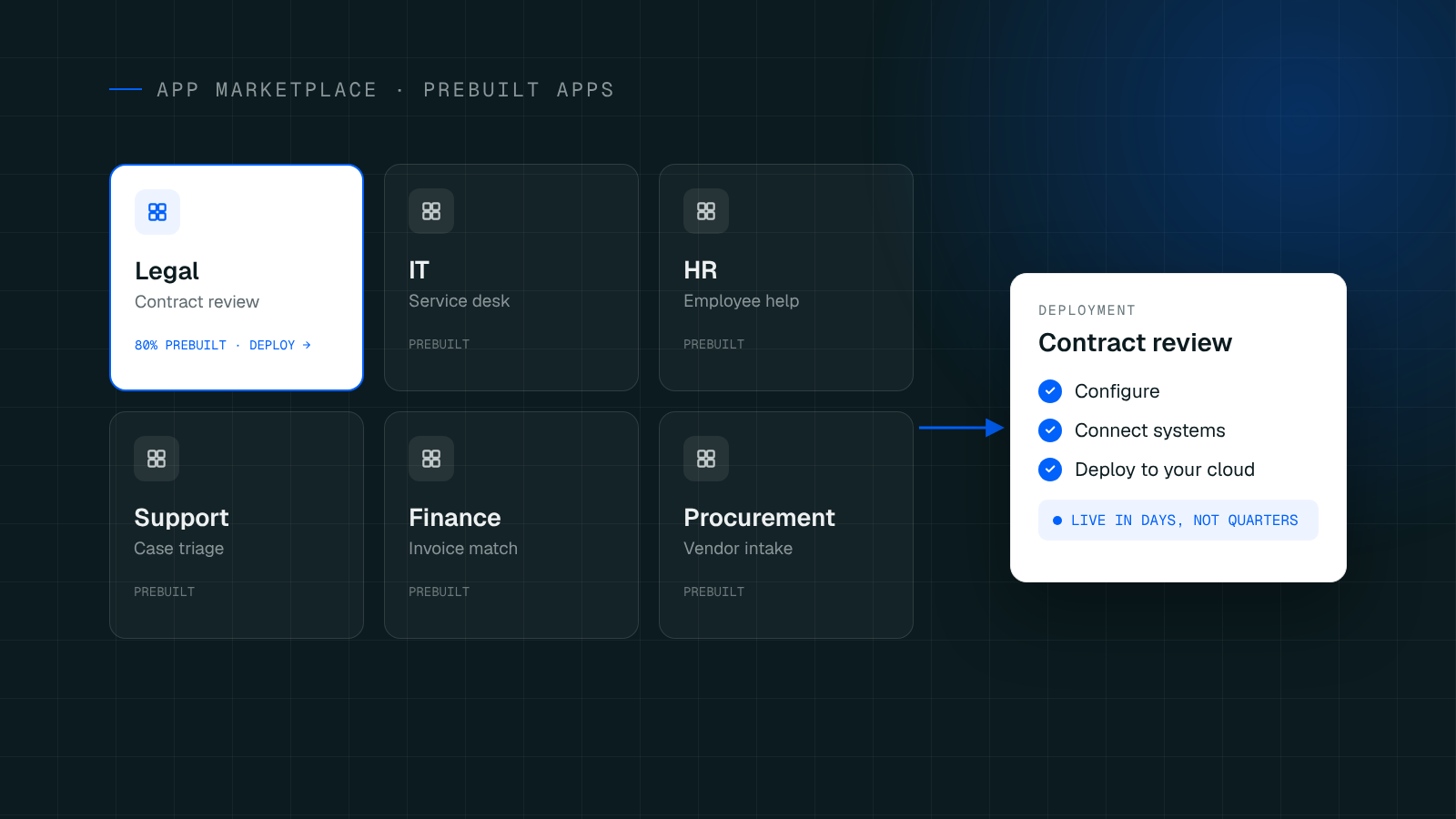
By treating AI as composable software, Cenna eliminates the "integration spaghetti" that plagues first-generation LLM projects. Engineering teams no longer spend quarters building basic API connections and logging infrastructure. They simply equip Cenna's autonomous Agents with pre-built Skills, apply their unique business logic, and ship secure, highly capable AI applications in days.
Frequently asked questions
Can a Skill built for one department be reused by another Agent elsewhere in the company?
Yes, because Skills are built once by the platform team as modular, atomic operations, they can be reused infinitely across different departments.
How does Cenna prevent an Agent from performing actions outside its intended domain?
Agents are only granted the Skills necessary for their assigned domain, and each Skill declares an explicit scope for external systems, so the Agent literally cannot act outside that predefined boundary.
How would a developer actually debug a failed Agent workflow in Cenna?
They can open the step-by-step trace in the Cenna console to see the Agent's reasoning, the exact API payload sent, the external system's response, and the cost of that task, then replay the run and fix the specific failed Skill without rebuilding the whole application.