Every IT leader knows the frustration of the modern service desk queue. Despite investing in self-service portals and internal wikis, highly paid IT analysts still spend their days manually working through the exact same low-tier requests: locked accounts, lost VPN access, software license requests, and new-hire onboarding checklists.
The industry’s initial answer to this was the "IT Chatbot"—a floating window that simply regurgitated knowledge base articles at frustrated employees. But chatbots don't execute work; they just deflect it.
Enter Cenna Agentic ITSM.
Cenna takes a fundamentally different approach. It is not a chatbot; it is a complete, autonomous IT service desk. Cenna agents don’t just answer questions—they actively triage incoming tickets, diagnose the root cause, and autonomously close routine requests end-to-end without a human ever entering the loop.

What the Agent Handles, End to End
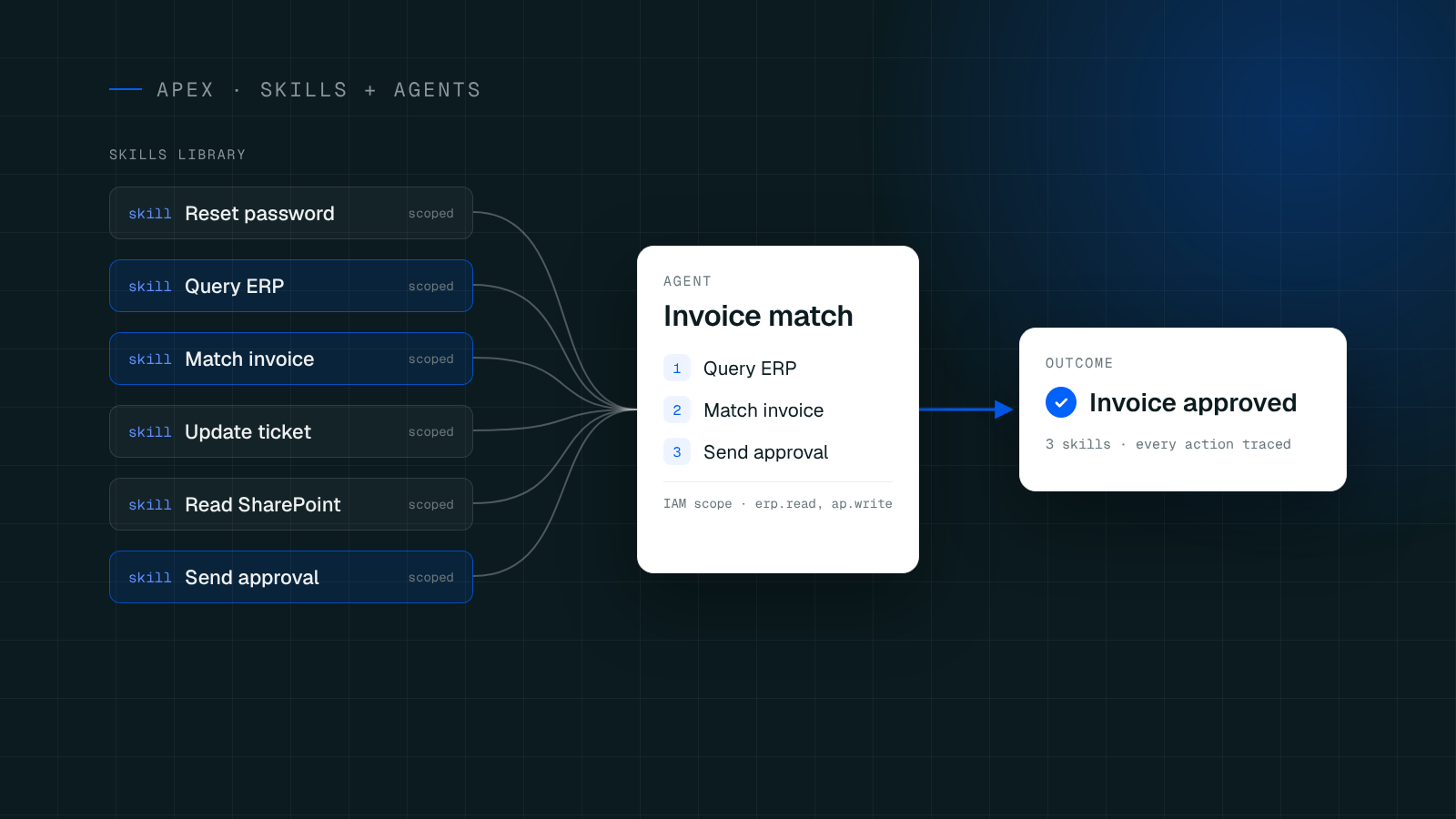
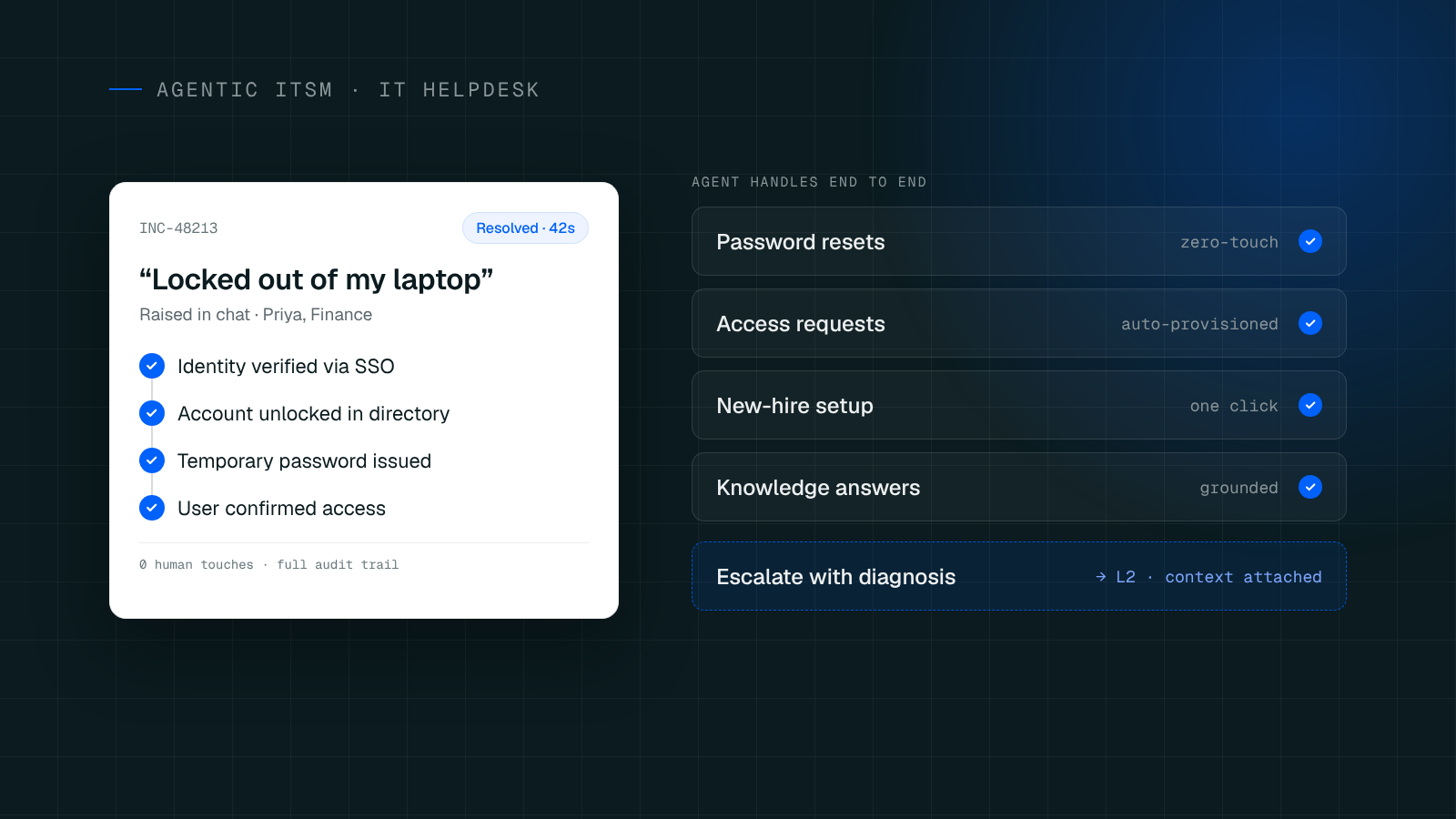
Cenna is designed to clear the noise out of the service desk queue. When a ticket arrives, the Cenna agent immediately reads it, determines the category and priority, and begins executing the work. Out of the box, it comes pre-wired with 15 specific IT skills to handle the most common burdens:
Zero-Touch Password Resets: If an employee is locked out, the agent verifies the requester, securely executes the reset through your identity provider (like Okta), sends the one-time link, and closes the ticket—all in under 40 seconds. No human touch required.
Provisioning Access: When an employee requests a new software license, the agent cross-references your internal access policy. If standard, it provisions the app and adds the user to the correct groups. If the request requires exception approval, the agent automatically stages it and pings a manager for sign-off.
One-Click New Hire Setup: Employee onboarding is typically a manual checklist of creating accounts across half a dozen systems. Cenna takes a single onboarding request, creates the accounts, assigns a device via Intune or Jamf, and sends the welcome packet autonomously.
Grounded Knowledge Retrieval: For policy and "how-to" questions, the agent reads directly from your internal runbooks and documentation—providing precise answers grounded in your data, not generic LLM guesses.
The Perfect Handoff: Escalate with Diagnosis
Agentic ITSM isn't designed to replace your IT team; it is designed to free them up. But not every ticket can—or should—be solved by an AI.
When a complex incident arises (like a localized network outage or a bespoke hardware failure), the agent escalates the ticket. Crucially, it doesn't just hand over a blank slate. By the time a human analyst opens the ticket, the agent has already performed the initial diagnostics. It hands over the root cause analysis and a log of everything it has already checked. The analyst starts from step four, not step zero.
Seamless Integration, Explicit Guardrails
Connecting an autonomous agent to core IT infrastructure requires absolute trust. Cenna ensures this through two integration methods:
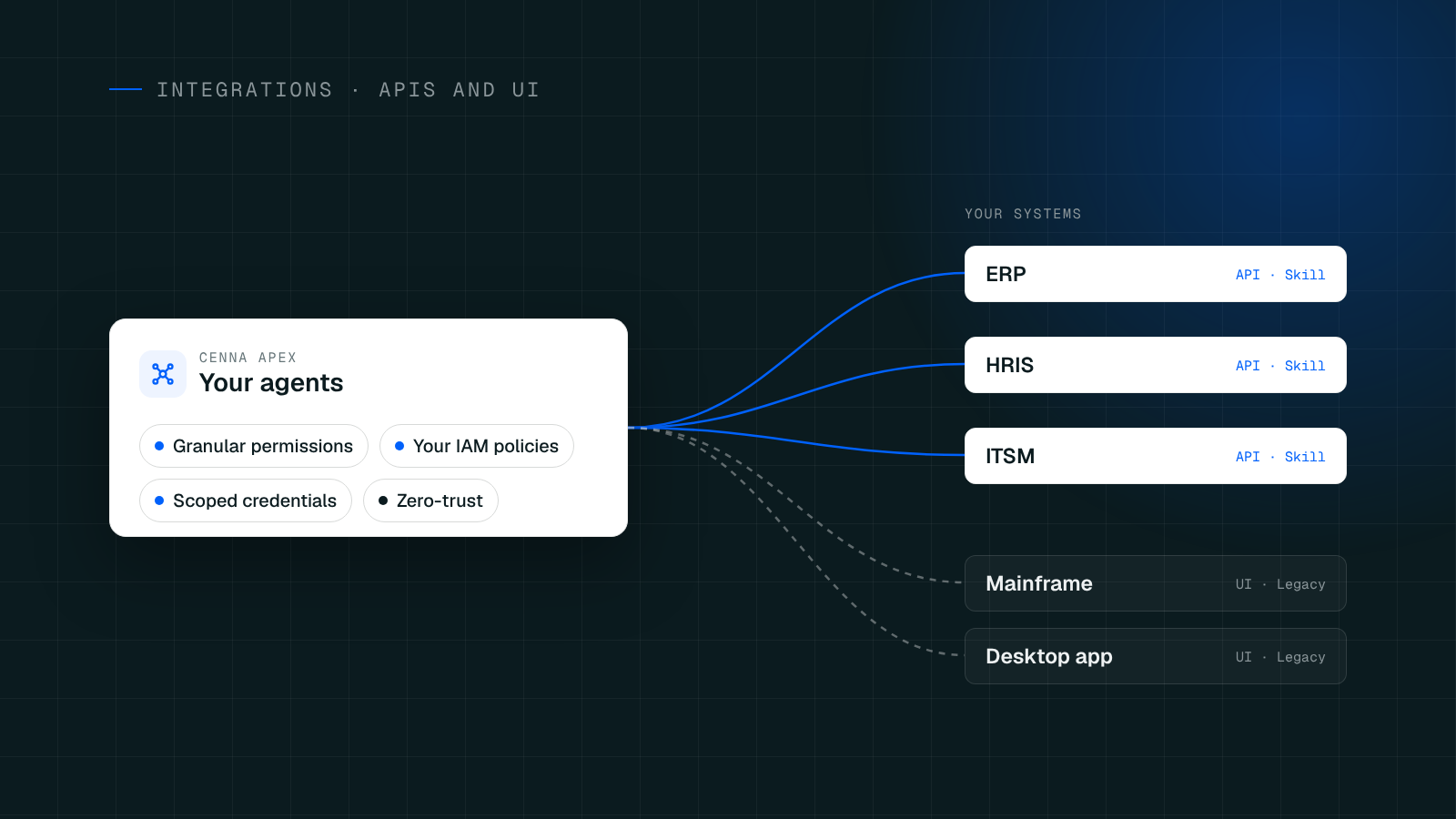
Explicitly Scoped APIs: Cenna plugs into your existing stack—Okta, Jira, Slack, Intune (view the detailed list of Cenna integrations) in a single day. However, it operates on a strictly zero-trust model. An integration declares exactly what it is allowed to touch. If the agent is scoped to reset passwords in Okta and update tickets in Jira, it physically cannot delete an Okta user or modify a Jira workflow.
Legacy UI Navigation: What if you need to provision access in an old admin console that lacks an API? Cenna agents can securely sign in with their own scoped credentials and navigate the screen exactly like a human would, filling out forms and clicking buttons to complete the workflow.
Additionally, you don't need to learn a new coding language to train the agent. Your runbooks become its playbooks. You write reset procedures, access policies, and escalation paths in plain English. If a procedure changes, you simply update the text playbook, and every agent immediately follows the new rule.
The Bottom Line: Shrink the Queue, Don't Just Manage It
For too long, ITSM platforms have focused on helping teams manage massive ticket queues efficiently. Cenna Agentic ITSM focuses on shrinking the queue entirely. By resolving resets, access grants, and onboarding requests at the point of intake, Cenna ensures that the only tickets sitting in your queue are the ones that actually require human judgment and engineering expertise.
Frequently asked questions
How does Cenna differ from a traditional IT chatbot?
Unlike a chatbot that just deflects work by regurgitating knowledge base articles, Cenna is an autonomous IT service desk that triages tickets, diagnoses root causes, and executes and closes routine requests end-to-end without human involvement.
What happens when a ticket is too complex for Cenna to resolve on its own?
Cenna escalates the ticket to a human analyst, but only after performing initial diagnostics and handing over the root cause analysis and a log of everything already checked, so the analyst starts from step four instead of step zero.
How do I train or update Cenna's procedures without coding?
You write reset procedures, access policies, and escalation paths as plain-English runbooks that become the agent's playbooks, and updating the text immediately changes the rule every agent follows.