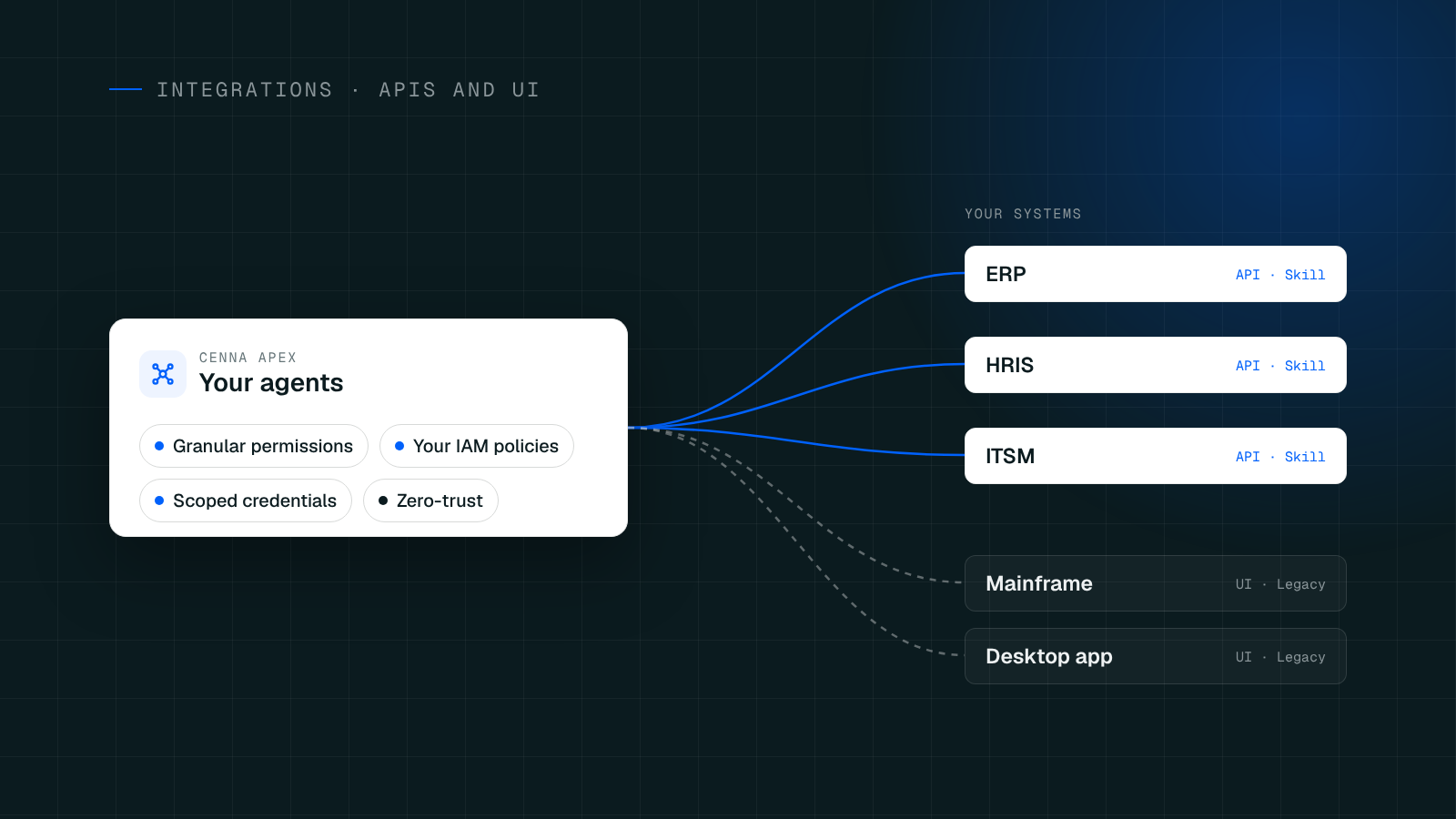
A major failure point for most enterprise AI initiatives is connectivity. An AI agent is only as intelligent as the data it can access and the systems it can act upon. However, integrating autonomous AI into an enterprise environment usually forces organizations into a painful trade-off: spend months building custom, hardcoded API pipelines, or risk opening your databases to SaaS AI vendors.
Cenna eliminates this compromise. By deploying directly into your cloud (AWS or Google Cloud) and utilizing a dual-path integration architecture, Cenna agents can seamlessly connect to both modern enterprise tools and aging legacy systems—all while strictly enforcing your security policies.
Here is a closer look at how the Cenna platform approaches enterprise integrations.
Two Paths to Integration: APIs and UI
Not all enterprise systems are created equal. Cenna handles this reality by offering two distinct ways for its agents to connect and execute work:
1. API-Driven Integrations (Skills)
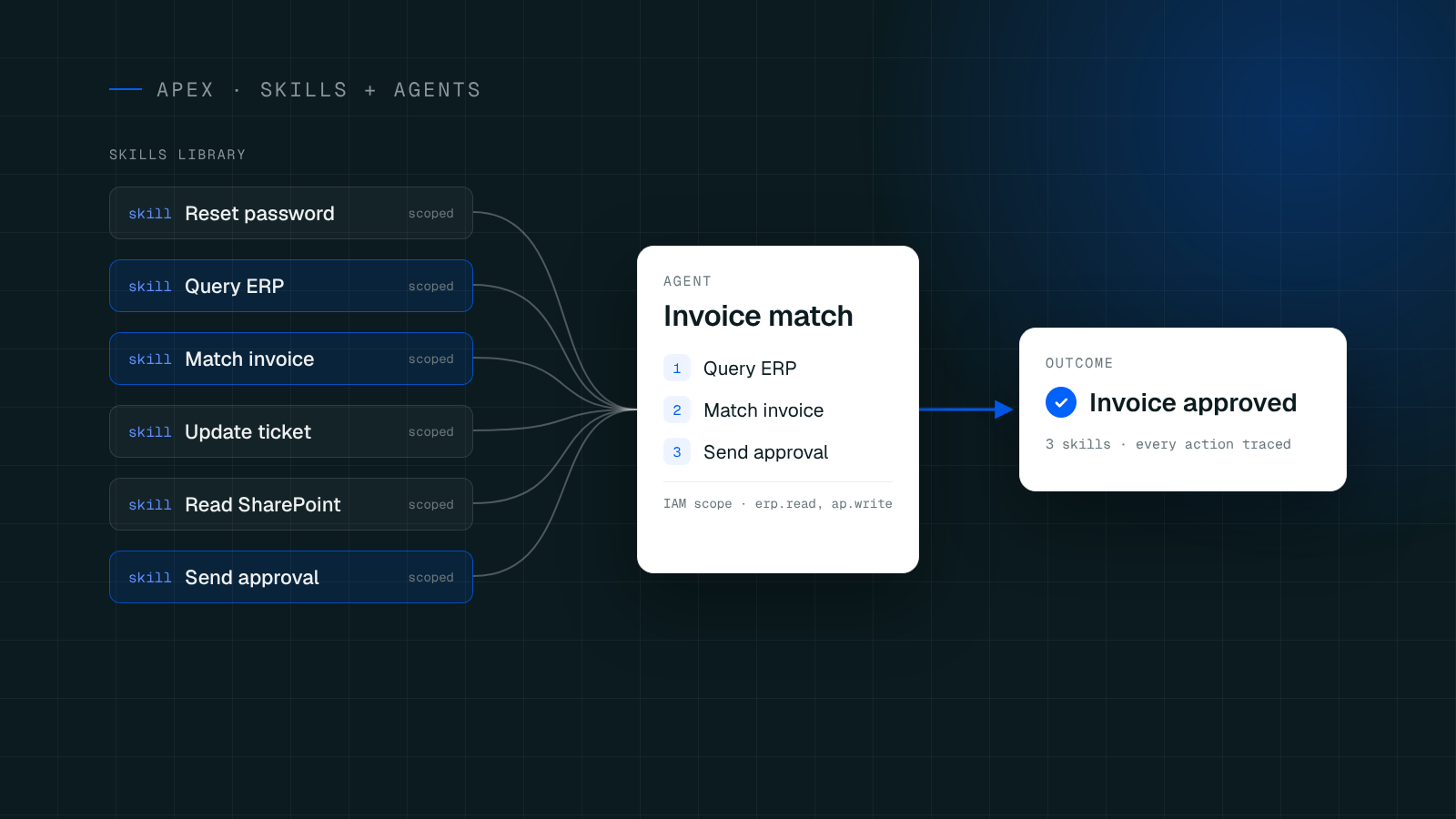
For modern enterprise applications with robust APIs (such as Jira, Slack, Okta, Zendesk, or SharePoint), Cenna uses its Skills framework. A Skill is a micro-function that executes a specific API payload. Instead of a developer writing complex logic to connect an LLM to Jira, they simply equip the Cenna agent with a pre-built Jira integration.

2. UI-Driven Integrations (Legacy Automation)
What happens when you need an agent to pull data from a 2004 mainframe emulator, a government portal, or an ancient ERP that simply has no API? Traditional integration platforms stop dead in their tracks here. Cenna solves this through its Legacy Automation browser sessions. If a system lacks a connector, Cenna agents can securely log into the system via a browser, visually read the screen, and execute the task exactly the way a human would—no API required.
Explicit Scopes and Zero-Trust Security
The primary concern with connecting AI to platforms like SharePoint or Okta is access sprawl. If an AI agent can read one file, what stops it from reading the CEO's private documents?
Cenna's integration architecture is built on a foundation of explicit scoping and zero-trust security:
Granular Permissions: When a Cenna integration connects to a system, it declares a highly specific scope. For example, if an agent needs to post an update to a team channel, its Slack integration is scoped strictly to
Slack chat:write. It physically cannot read private DMs or delete channels.Your IAM Policies Apply: Because Cenna installs into your cloud environment, all integrations run through your existing Identity and Access Management (IAM) and Single Sign-On (SSO) providers.
Scoped Agent Credentials: Agents do not piggyback on human credentials. They are issued their own unique, scoped credentials that you can audit, monitor, and revoke in a single click.
Out-of-the-Box Connectors for the Modern Enterprise
While Cenna allows developers to easily build custom skills for proprietary internal systems, the platform comes pre-wired with integrations for the tools that power the modern enterprise, including:
Identity & Security: Okta, Active Directory
Collaboration & Chat: Slack, Microsoft Teams
Knowledge & Documents: SharePoint, Confluence, Google Drive
Ticketing & ITSM: Jira, ServiceNow, Zendesk
Finance & ERP: Leading ERP systems and HRIS platforms
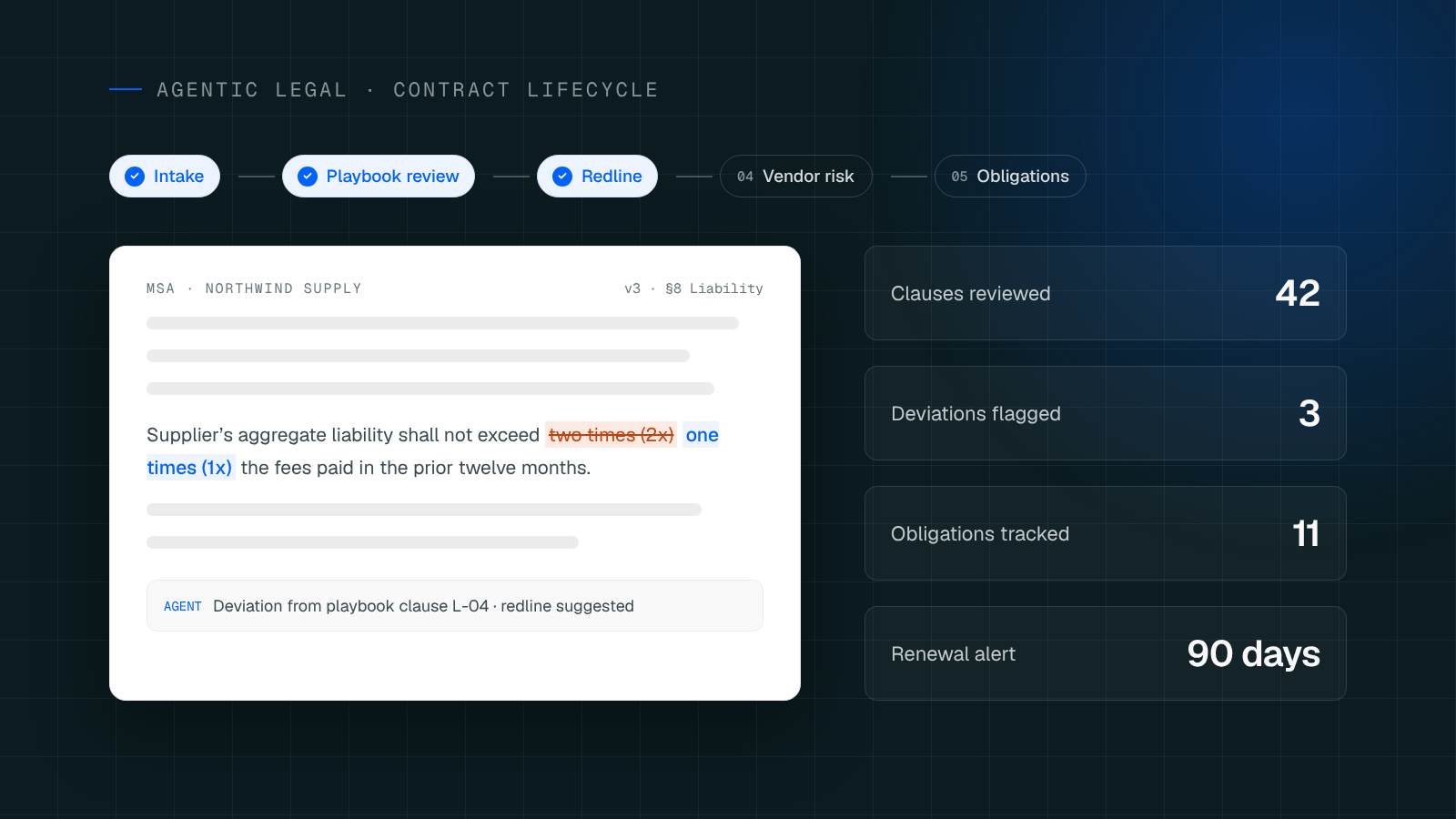
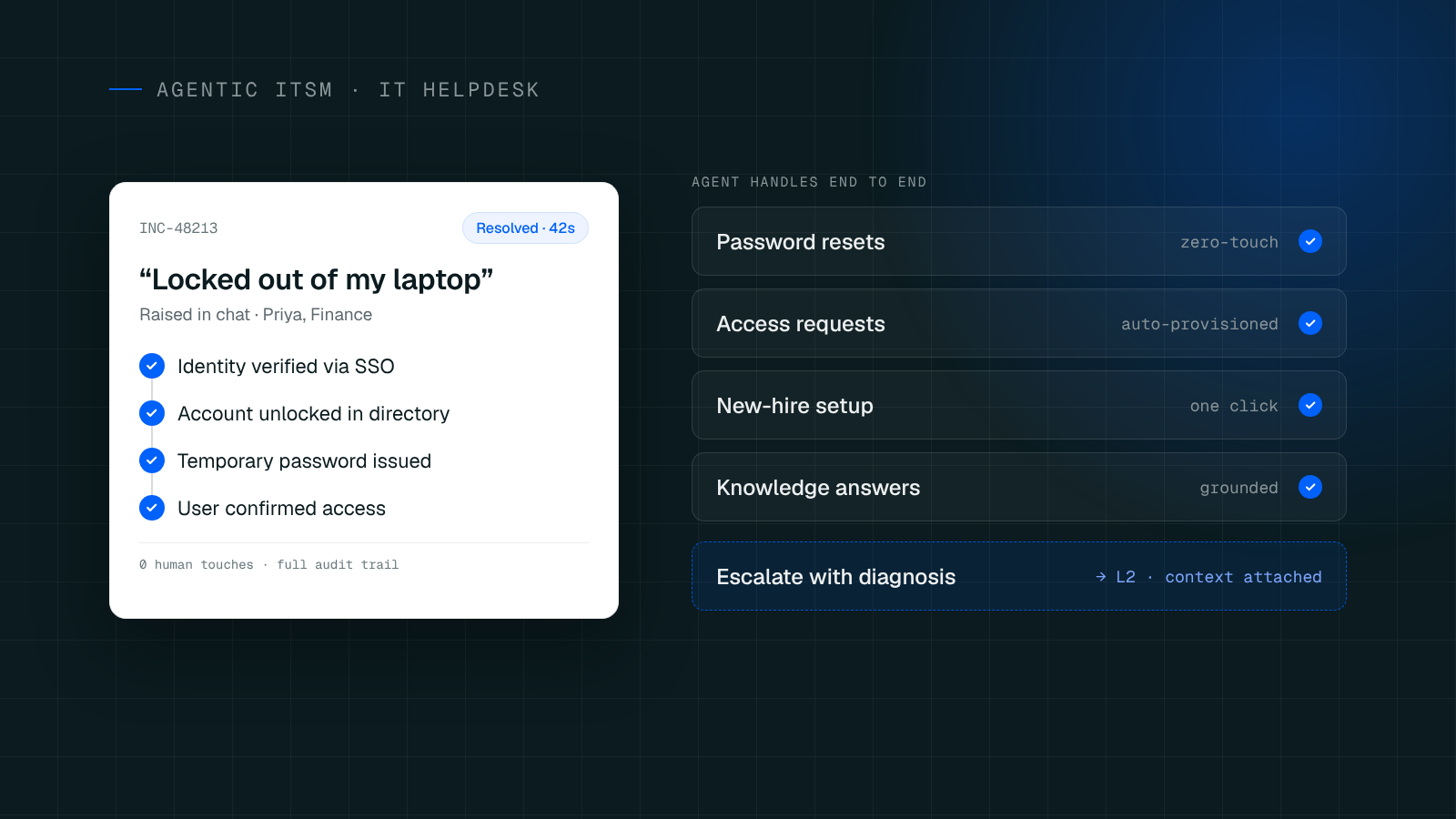
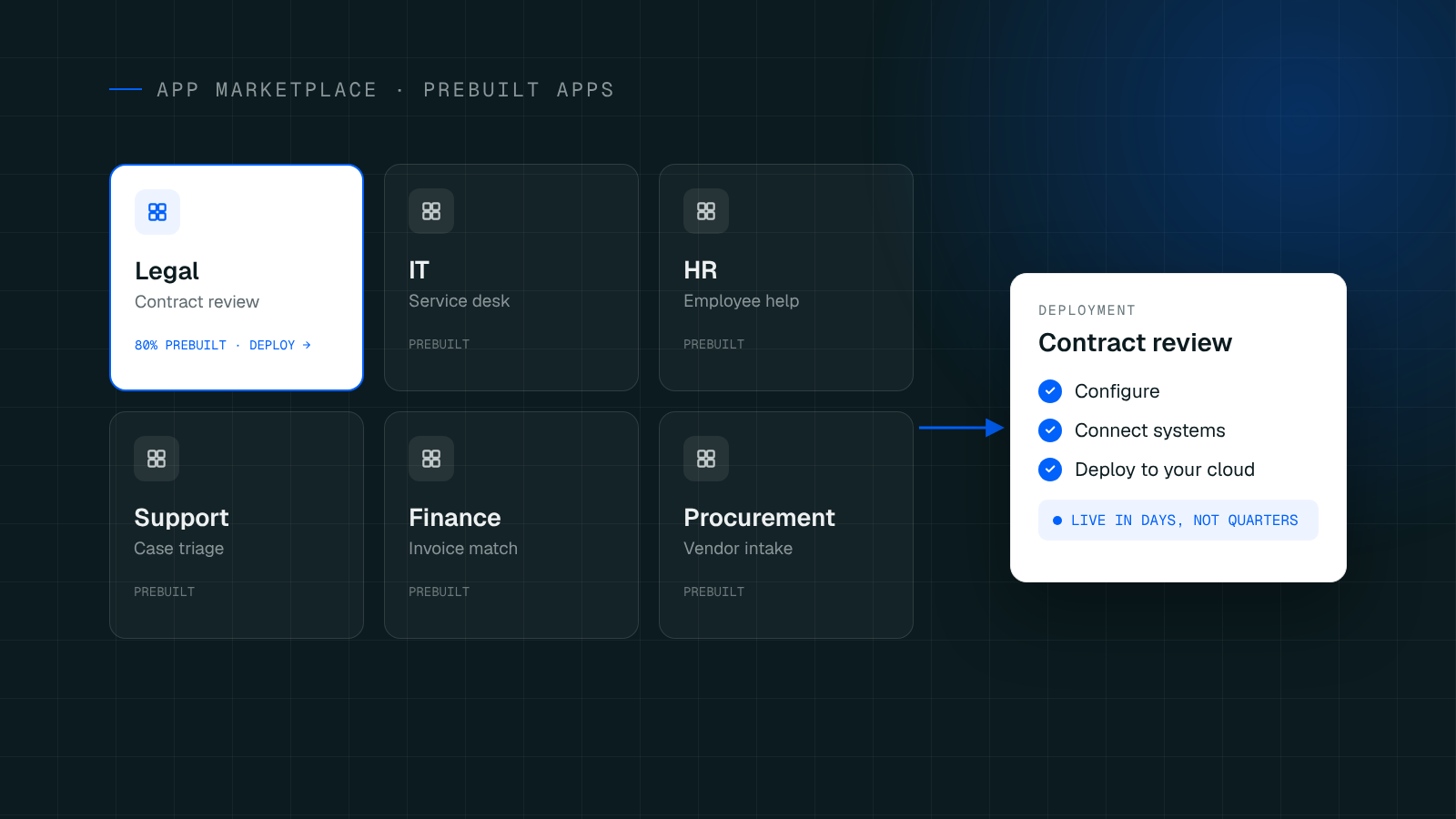
By bundling these connectors directly into the platform, Cenna ensures that applications like Agentic ITSM or HR Onboarding work seamlessly from day one, pulling context from Confluence and resolving tickets in Jira without requiring quarters of platform engineering.
The End of Brittle, Hardcoded Workflows
Traditional integration platforms (like Zapier or legacy RPA) rely on rigid IF/THEN logic. If an API payload changes slightly, the entire workflow breaks, and IT gets paged.
Because Cenna relies on agentic AI, its integrations are dynamic. The agent understands the goal of the task. If a user asks the IT Helpdesk agent to provision software, the agent reasons through the steps, dynamically calls the Okta integration to verify access, uses the Slack integration to ask the user for clarification if something is missing, and then executes the provisioning.
The Bottom Line
True enterprise automation requires an AI that can actually reach your data and take action across your entire tech stack. Cenna’s integration platform bridges the gap between modern APIs and legacy systems—delivering the power of autonomous agents with the absolute security and control your enterprise demands.
Frequently asked questions
Can Cenna integrate with systems that don't have an API?
Yes, through Legacy Automation browser sessions, Cenna agents can securely log into systems via a browser, visually read the screen, and execute tasks exactly as a human would, without needing an API.
How does Cenna prevent AI agents from accessing more data than they should?
Cenna enforces explicit scoping and zero-trust security, meaning each integration declares a highly specific scope (like Slack chat:write) so the agent physically cannot access unrelated data such as private DMs or files.
Can developers build custom integrations for proprietary internal systems?
Yes, Cenna allows developers to easily build custom skills for proprietary internal systems in addition to its pre-wired connectors for common enterprise tools.