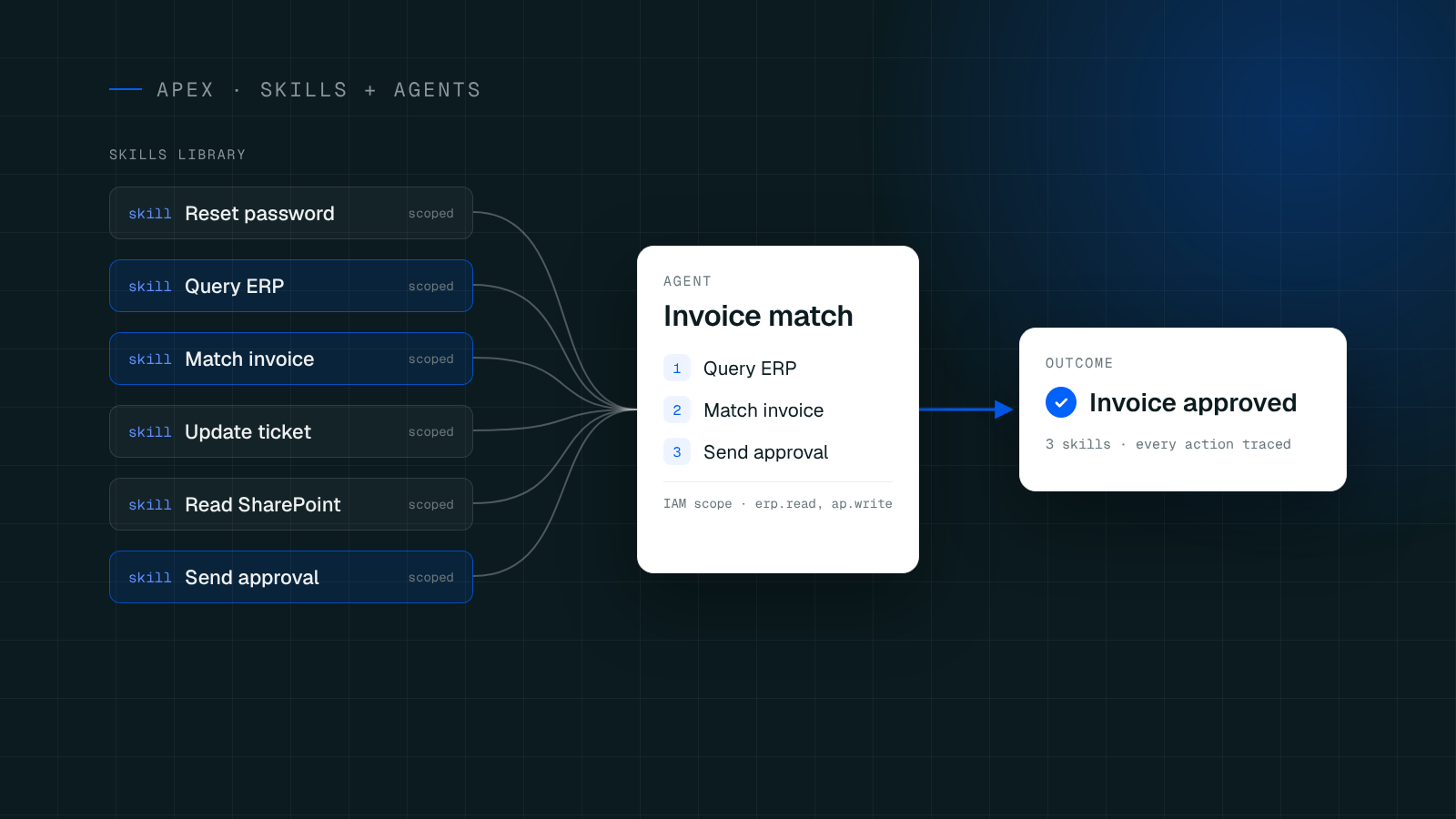
When enterprise engineering teams set out to build agentic AI, they often fall into a predictable trap: they spend months hardcoding integrations and basic capabilities before the AI ever performs a useful task. Every new agent requires a custom-built tool to read a SharePoint file, query a database, or update a Jira ticket.
The Cenna Apex Platform eliminates this redundant engineering through its architecture of Skills and Agents. By providing a library of reusable, secure, and easily configurable capabilities, Cenna allows your developers to focus on high-level business logic rather than boilerplate API connections.
Here is a look at how Cenna structures Skills and Agents to rapidly scale AI across the enterprise.
The Building Blocks: What is a "Skill"?
In the Cenna ecosystem, a Skill is a singular, atomic action that your team repeats constantly. It is the tactical execution of a task.
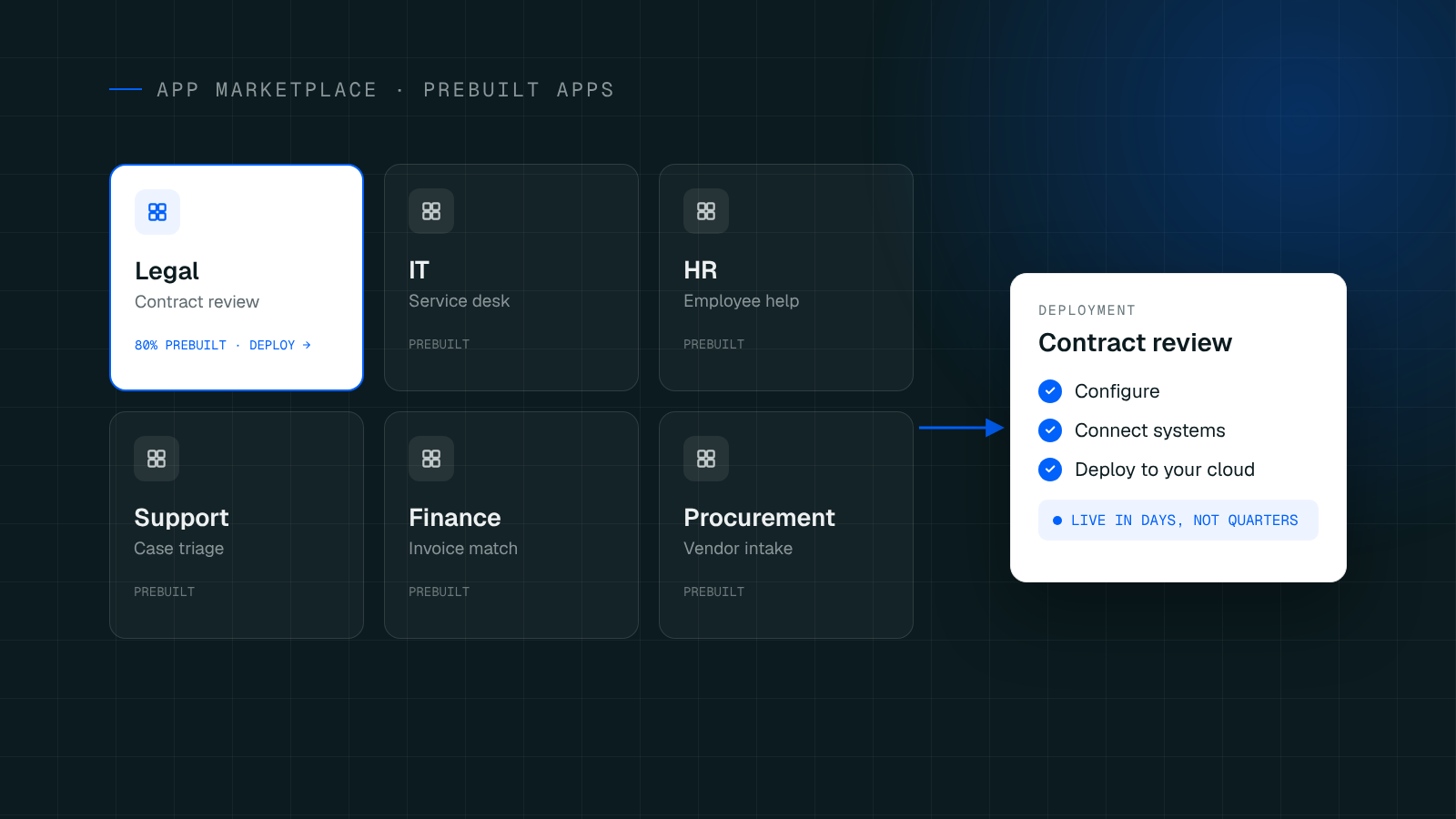
Every prebuilt Cenna application comes with dozens of these skills built directly into the platform. Examples include:
Resetting a user password in Okta.
Matching an incoming invoice to its corresponding Purchase Order in an ERP.
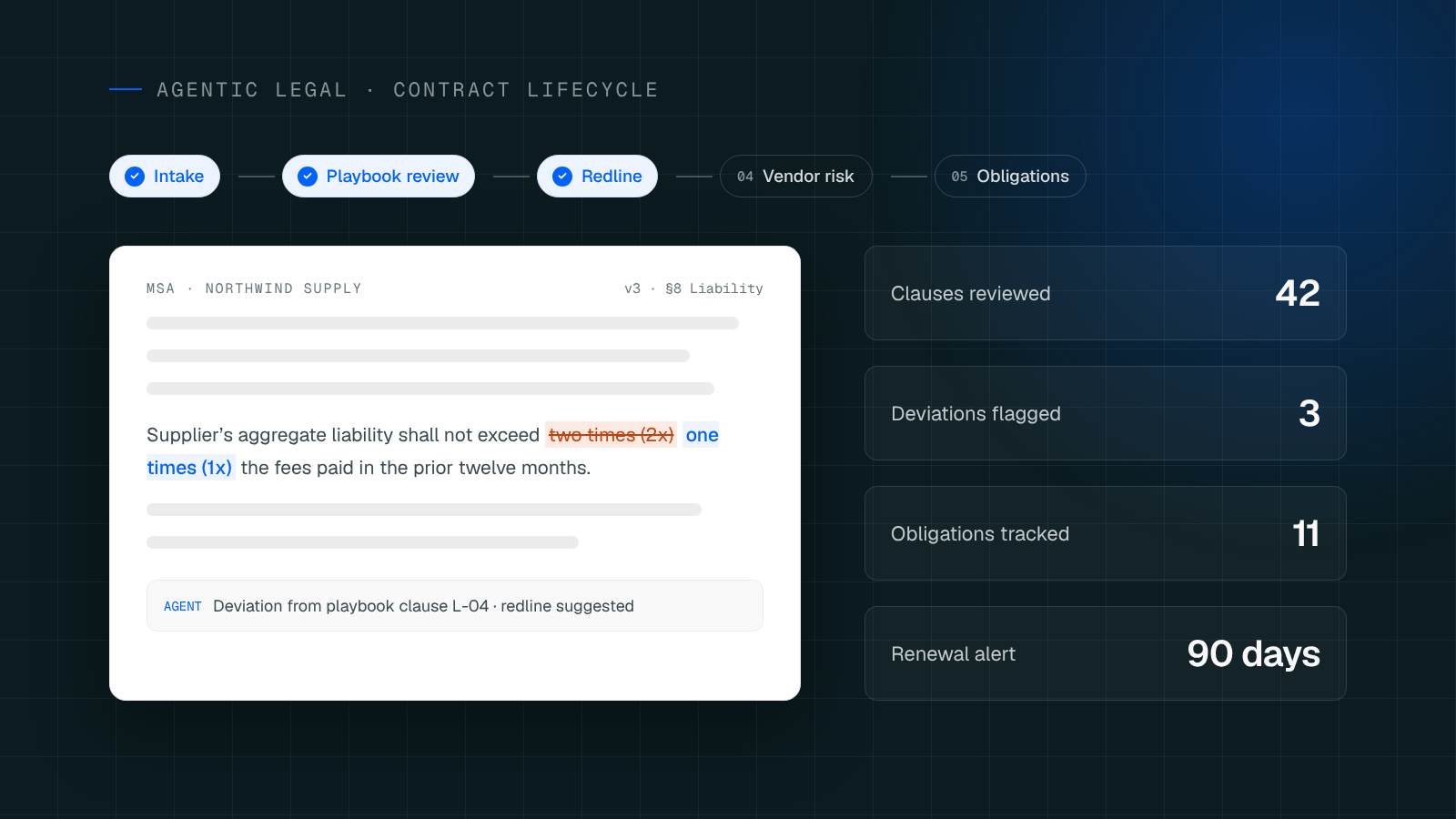
Drafting a redline for a specific clause in a contract.
Querying an employee's PTO balance in an HRIS.
Rather than building these functions from scratch for every new AI project, developers simply equip their agents with these pre-packaged skills.
The Orchestrators: What is an "Agent"?
If a Skill is a tool, the Agent is the worker that wields it.
Agents on the Cenna platform are autonomous orchestrators assigned to real business outcomes. They don't just answer questions—they plan, retrieve context, and take action by stringing multiple skills together.
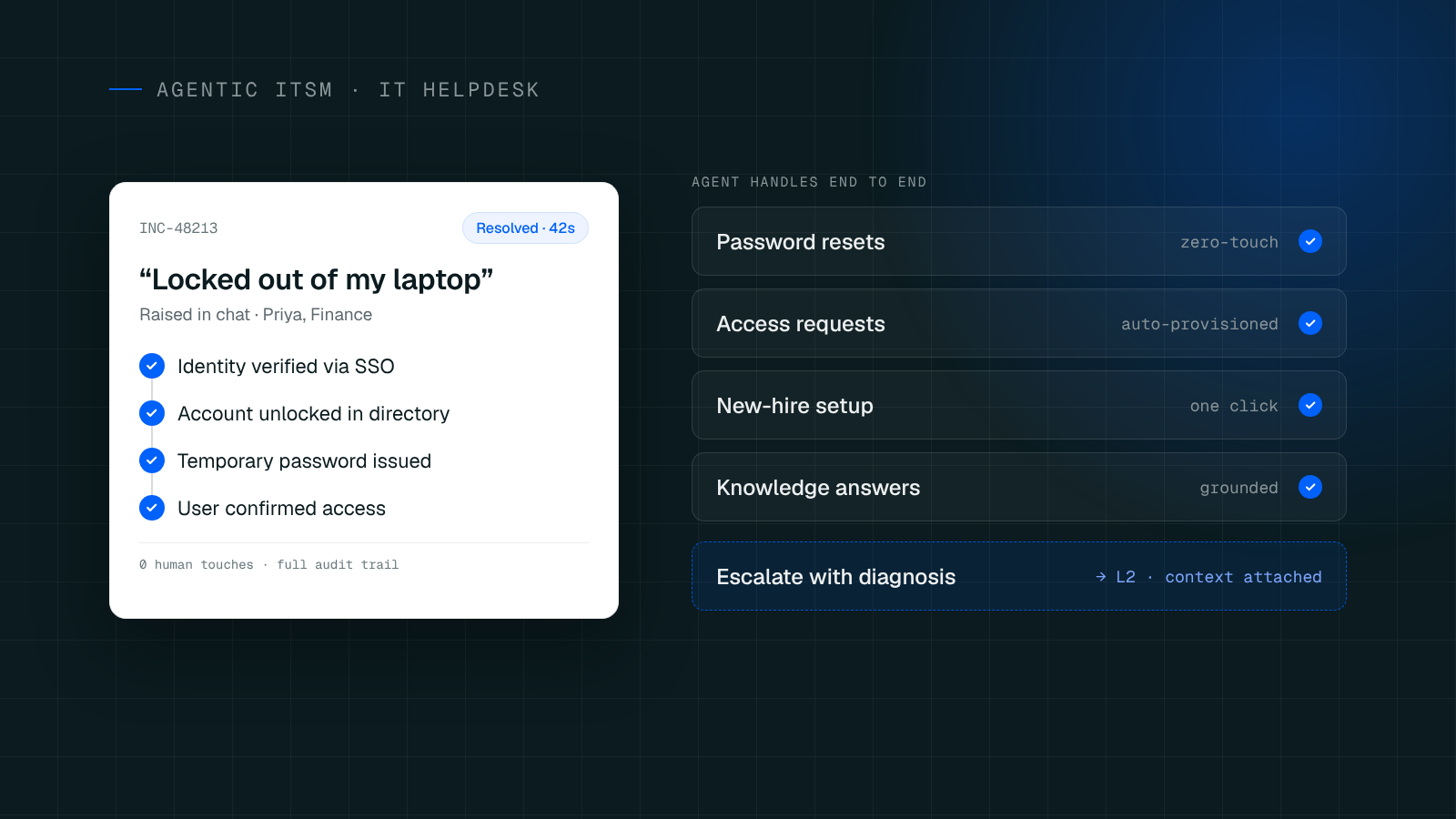
For instance, an IT Helpdesk Agent doesn't just know how to chat with an employee. When a ticket comes in, the agent:
Uses a skill to read the employee’s hardware profile.
Uses a skill to search the internal IT knowledge base.
Uses a skill to provision a software license.
Uses a skill to close the ticket and notify the user via Slack.
Explicit Scopes and Guardrails
Giving autonomous agents the ability to execute tasks inside enterprise systems sounds risky, but Cenna's architecture is built fundamentally around control.
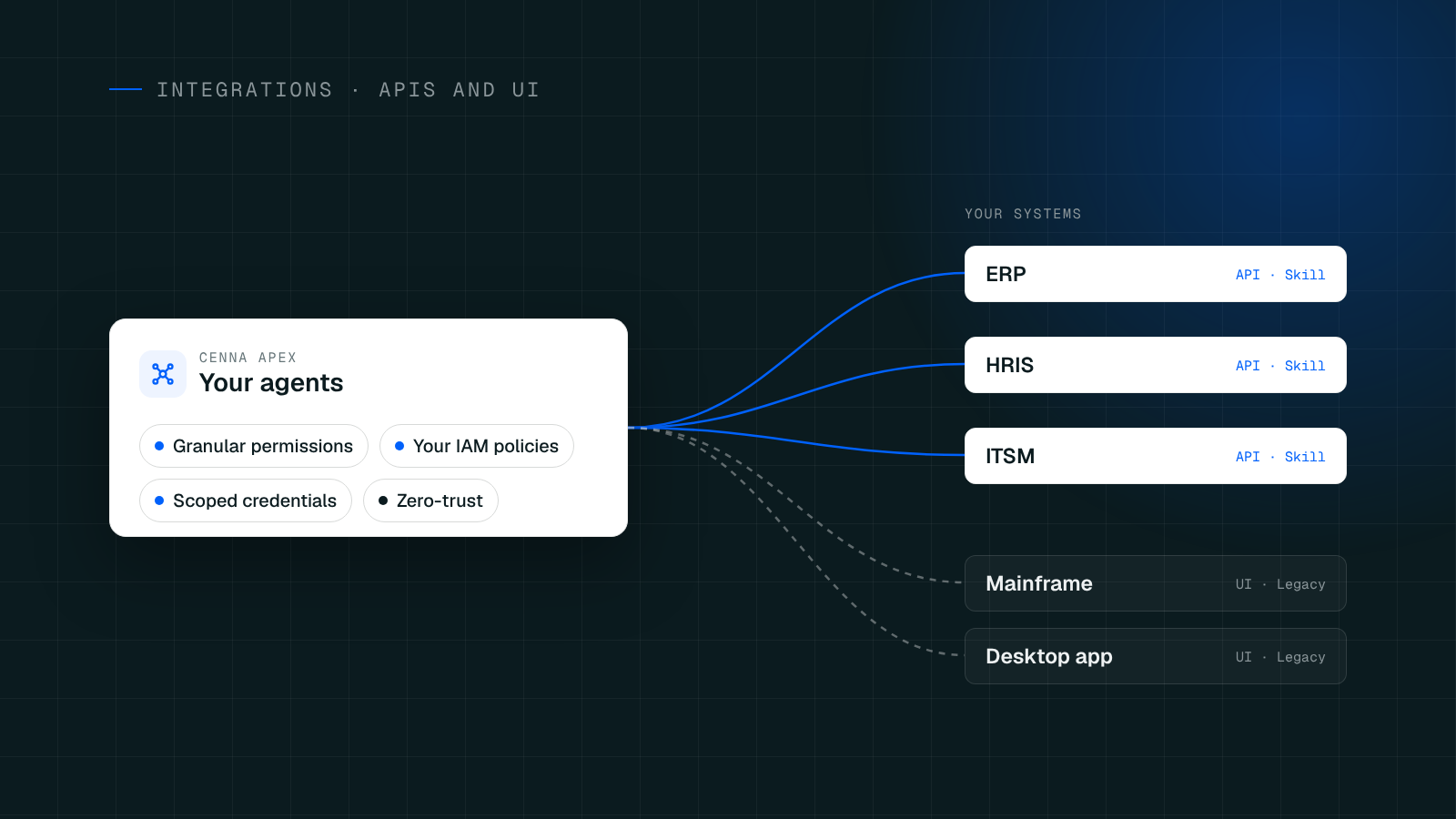
Skills are inherently bound by explicit integration scopes. When a skill is connected to your environment, it declares exactly what it is allowed to touch—and nothing more. If a skill requires SharePoint Sites.Read.All and Slack chat:write, the agent cannot use that skill to delete a file or modify a user's permissions.
Because Cenna agents operate strictly within your own cloud account, these permissions follow your existing SSO and Identity Access Management (IAM) guardrails.
Full Traceability for Every Action
A major challenge with agentic AI is the "black box" problem: knowing why an agent took a specific action.
With Cenna, every time an agent executes a skill, the entire run is recorded as a trace. From the Cenna console, platform teams can open a trace to see:
The exact spans and logic the agent executed.
The specific API calls the skill made.
The token and cloud compute cost of that single action.
If an agent makes a mistake or gets stuck in a loop, you can replay the run to see where the logic failed, pause the agent, or immediately revoke its skills—all without waiting on a support ticket from a vendor.
The Bottom Line
True enterprise AI isn't a simple chatbot bolted onto a database; it is a system of agents performing actual work. By decoupling the execution (Skills) from the orchestration (Agents), Cenna provides a modular, highly secure, and instantly scalable foundation. Your team skips the infrastructure build and goes straight to deploying agents that get the job done.
Building an LLM Wiki with Skills and Agents
This video provides a broader look into how developers approach building and integrating skills and agents within enterprise LLM environments.
Frequently asked questions
How does Cenna prevent an agent from exceeding its intended permissions?
Skills are bound by explicit integration scopes that declare exactly what systems and actions they can touch, so an agent cannot use a skill beyond those declared permissions. These permissions also follow your existing SSO and IAM guardrails since agents operate within your own cloud account.
What can you do if an agent malfunctions or gets stuck in a loop?
You can open the recorded trace to see the exact logic and API calls the agent executed, replay the run to find where it failed, pause the agent, or immediately revoke its skills without needing a vendor support ticket.
How do Skills and Agents work together in practice?
A Skill is a single atomic action, like resetting a password or querying a database, while an Agent is the autonomous orchestrator that strings multiple skills together to plan, retrieve context, and complete a full business outcome.